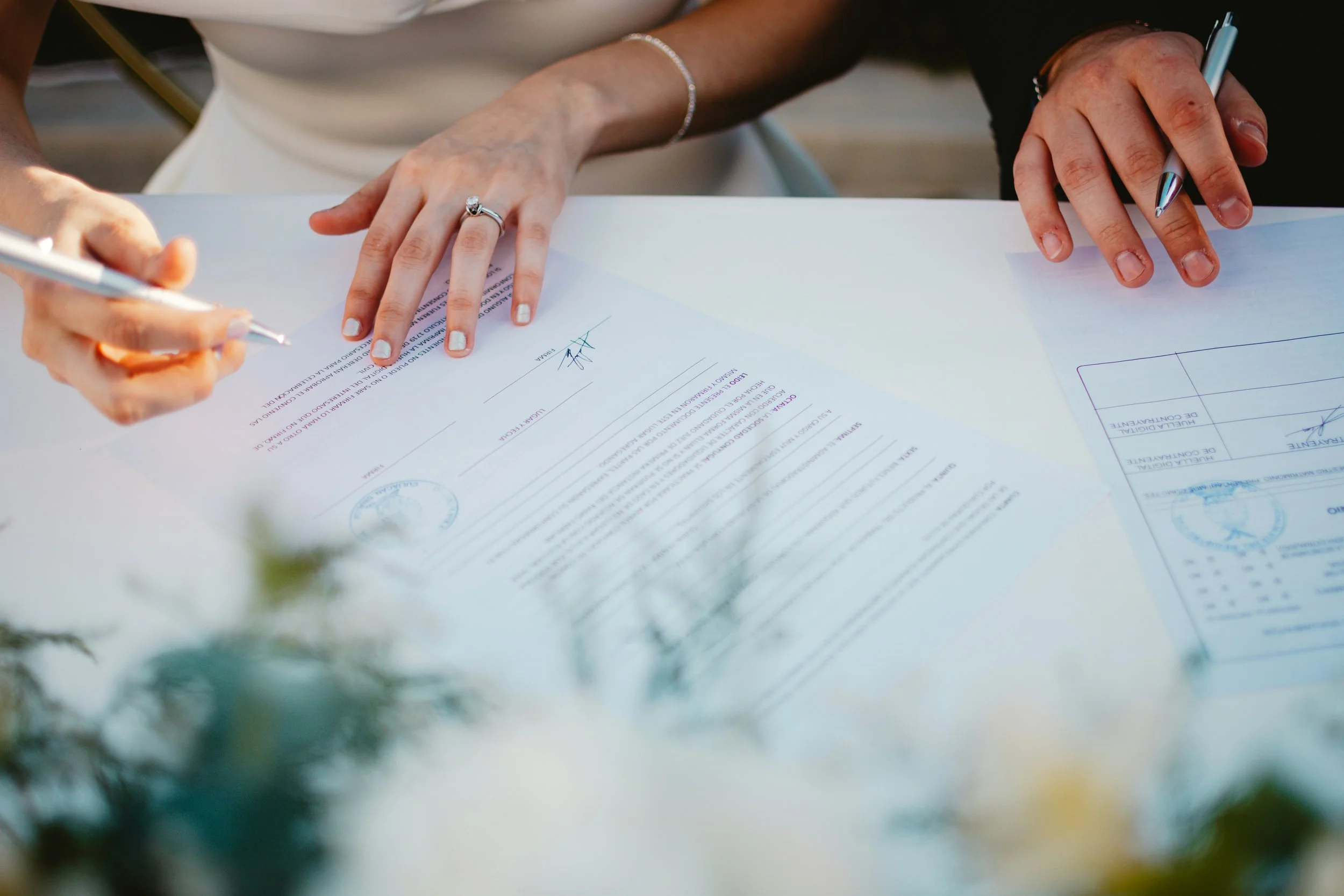
Photo by Fotógrafo Samuel Cruz on Unsplash
Planning a wedding in California? Here's a simple guide to the paperwork, ceremony requirements, and little details that make your marriage official.
You're engaged! Congratulations!
Between choosing a venue, finding the perfect outfit, and deciding whether you really need a seating chart (spoiler: maybe!), it's easy to overlook one very important detail: the marriage license.
The good news? Getting legally married in California is fairly straightforward. Whether you're planning an intimate backyard ceremony in Redlands, an orchard wedding in Oak Glen, or a beautiful celebration in Palm Springs, here are the essentials.
Step 1: Get Your California Marriage License
Before your wedding ceremony, you'll need to obtain a marriage license from a California county clerk.
A California marriage license is valid for 90 days from the date it's issued. Your ceremony must take place during that period and within California.
You can obtain a license from one California county and generally use it for a ceremony anywhere in the state. The completed license must be returned to the appropriate office in the county where it was issued.
My advice? Don't leave this until the last minute. Check your county clerk's appointment availability and documentation requirements well before your wedding date.
For Inland Empire couples, these are helpful starting points:
San Bernardino County: https://arc.sbcounty.gov/marriage/
California Department of Public Health: https://www.cdph.ca.gov/Programs/CHSI/Pages/Marriage-License-Information.aspx
Step 2: Choose the Right Type of Marriage License
California offers both public and confidential marriage licenses.
Public marriage license: This is the standard option for many couples. It requires at least one witness at the ceremony, in addition to your officiant.
Confidential marriage license: This option has additional eligibility requirements, including that the couple must already be living together as spouses. No witness is required, and access to the marriage record is restricted.
If you're unsure which option is appropriate, ask the county clerk before applying.
Step 3: Choose Someone Authorized to Officiate
Your wedding isn't made official by the flowers, the rings, or even the first kiss. It requires a ceremony performed by someone authorized under California law.
Authorized officiants include certain clergy members and civil officials, among others.
But here's something I always encourage couples to remember: Your officiant does more than make your marriage legal.
This is the person who will stand beside you during one of the most meaningful moments of your lives. They help set the tone, guide the ceremony, and create space for your story to be celebrated.
Whether you want something short and sweet or deeply personal, choose someone who understands your vision and makes you feel comfortable.
Step 4: Have Your Wedding Ceremony
Here's something many couples don't realize: California doesn't require an elaborate ceremony or a particular script.
The essential part is that both partners declare, in the physical presence of the authorized officiant and any required witness, that they take each other as spouses.
That means your ceremony can be simple, romantic, funny, traditional, modern, or a beautiful combination of everything that makes you you.
You can include personal vows, a meaningful reading, family participation, or a unity ritual. Those elements aren't generally legal requirements, but they can make your ceremony unforgettable.
Step 5: Sign and Return Your Marriage License
After the ceremony, your officiant completes the required portions of the marriage license and obtains the appropriate witness signatures, if needed.
In California, the officiant is responsible for returning the completed license within 10 days after the ceremony to the appropriate office in the county that issued it.
For a public marriage license, that is generally the county recorder. Confidential marriage licenses are returned to the county clerk.
Once the license has been registered, you can request a certified copy of your marriage certificate. It typically isn't sent automatically.
Step 6: Celebrate Being Married!
Once the paperwork is handled, there's only one thing left to do: enjoy this new chapter together!
And remember, your wedding ceremony doesn't have to look like anyone else's.
I've seen firsthand that some of the most meaningful moments are also the simplest—a shared laugh, a quiet promise, or a moment when the whole room can feel just how much two people love each other.
Your ceremony deserves to feel like yours.
Looking for a Wedding Officiant in Southern California?
At The Bari Nook Weddings, I believe your ceremony should be personal, meaningful, and a reflection of your love story.
I serve couples throughout the Inland Empire and Southern California, with wedding ceremony packages starting at $300.
Whether you're getting married in Redlands, Riverside, San Bernardino, Oak Glen, Temecula, or beyond, I'd be honored to help make your day memorable.
Explore my wedding ceremony packages: https://www.thebarinook.com/services
Ready to talk about your wedding? Visit The Bari Nook Weddings at https://www.thebarinook.com/ and check your date.
Please note: Marriage requirements and county procedures can change. Always confirm the latest instructions with the county clerk that issues your license.